

The actual cost spans three layers most owners have never calculated together. When they finally see the full number, the conversation changes entirely.
This article links to 1 external source beside the claims they support.
I've run Front Door Audits on over two hundred service businesses. HVAC companies, plumbers, restoration crews, med spas, law firms. Different industries, different markets, different owners.
The conversation almost always starts the same way.
I ask: "What do you think a missed call costs you?"
The owner pauses. They think about it. Then they say something like "$400" or "$800", whatever they think the average job is worth.
That number is wrong. Not slightly wrong. Catastrophically wrong.
A missed call does not cost what the job was worth. That's the calculation most owners do when they think about it at all. Miss a call, estimate it was a quote request for a $400 job, move on.
The actual cost spans three layers most owners have never calculated together. When they finally see the full number, the conversation changes entirely.
Layer One: The Immediate Job Value
This is the obvious part. A caller needed a service. You didn't answer. They went elsewhere.
For most service categories, the average immediate call value looks like this:
Service Category Average Emergency Call Value Average Scheduled Call Value
|---|---|---|
HVAC $1,200 - $2,800 $250 - $600
Plumbing $800 - $2,200 $200 - $450
Electrical $600 - $1,800 $200 - $500
Med Spa / Aesthetics $650 - $2,500 $650 - $2,500
Family Law $2,500 - $8,000 $2,500 - $8,000
Restoration $2,000 - $15,000+ N/A (always urgent)
General Contracting $3,000 - $25,000 $3,000 - $25,000
Now apply a close rate. A live, answered call in a service business converts at roughly 30 to 40 percent. A voicemail converts at 2 to 5 percent, mostly from callers who leave a message and happen to get a callback before they've committed elsewhere.
So a single missed HVAC call at a $1,500 average ticket and a 35% close rate represents $525 in expected immediate revenue. That's Layer One.
Layer Two: The Lifetime Client Value, Where the Math Starts to Hurt
Here's the calculation that changes how owners think about their phone system.
That caller you didn't answer is not a one-time transaction. They're a relationship with a statistical trajectory.
In HVAC, a residential client who books once and has a positive experience returns for:
- Annual maintenance agreements ($150 to $300 per year)
- Future equipment repair (roughly 0.7 service calls per year over a 7-year relationship)
- Equipment replacement at end of useful life ($4,000 to $12,000 per system)
- Add-on services, thermostats, air quality, duct cleaning
The lifetime value of a residential HVAC customer runs $4,800 to $8,200 over seven years, depending on market and service mix. I've seen it calculated both ways by clients who pull their actual CRM data. That range holds consistently.
For a med spa, a client who books and converts typically returns 3 to 5 times per year for maintenance treatments. At $800 average treatment value, that's $2,400 to $4,000 annually. Over four years before natural attrition, the lifetime value is $9,600 to $16,000 per client.
A family law firm's math is different, a single retained client carries a matter value of $12,000 to $45,000 and rarely returns (cases end). But the referral value from satisfied family law clients is the highest I've seen across any category.
Apply the LTV multiplier to the HVAC example:
A missed call that would have become a customer at $1,500 immediate value has a true opportunity cost of:
- $525 (Layer One expected value at 35% close)
- + $6,500 (conservative lifetime, excludes equipment replacement)
- = **$7,025 per missed call**
That's for a single unanswered ring.
Layer Three: The Referral Chain, The Number Nobody Calculates
This is the one that makes the annual figure genuinely uncomfortable.
A satisfied service client refers other clients. The referral rate in home services, HVAC, plumbing, electrical, runs 1.1 to 1.4 referrals per satisfied client over 24 months. In medical aesthetics, I've seen referral rates of 1.3 to 1.8. Family law runs higher, 1.8 to 2.4 over five years, because clients who trust their attorney tell everyone who's getting divorced.
When you miss a call, you don't just lose the caller. You lose every person that caller would have sent to you.
Back to HVAC:
- Layer 1: $525 in expected immediate revenue
- Layer 2: $6,500 in lifetime value
- Layer 3: $6,500 × 1.2 referral multiplier = $7,800 in referred lifetime value
Total opportunity cost: $14,825 per missed call.
That is the full economic weight of a single unanswered phone call from a new inbound lead.
The first time I walked through this math with a Dallas HVAC owner, he pushed back. "That assumes I would have closed them," he said. I agreed, which is why we apply the close rate to Layer One. But he would have answered. He would have had a shot. A voicemail gives him no shot at all.
Why This Math Is Almost Never Run
Invisible losses are psychologically easy to tolerate.
A missed call doesn't produce a complaint. It doesn't show up on the P&L as a negative number. There's no invoice for the job that didn't happen, no CRM entry for the client relationship that never started. The money simply fails to materialize, and the owner never sees why.
The other factor is honest: owners are running operations. Managing technicians, chasing parts, handling customer escalations, coordinating schedules. The strategic question of "what is my phone system costing me" does not compete well for attention between job dispatches.
But the math doesn't care whether it's being tracked. The calls go unanswered. The leads go elsewhere. The referral chains that never started never compound. The gap grows quietly.
The Annual Accumulation
Apply the per-call math to annual volumes.
A five-truck HVAC operation with moderate marketing receives roughly 40 to 80 inbound calls per month. Depending on season and market, 35 to 45 percent of those arrive outside business hours.
Conservative scenario: 40 calls per month, 35% after-hours = 14 calls per month going to voicemail.
At $14,825 total opportunity cost per missed call, 14 missed calls per month represents$207,550 in annual opportunity costfrom the after-hours gap alone.
That's before accounting for:
- Daytime calls missed when the front desk is occupied
- Calls that rang four times and hit voicemail during a busy Wednesday morning
- Form submissions that sat in an email inbox for six hours
- Existing clients who called for a repeat booking and didn't get called back quickly enough
The real number, for a moderately busy service business, typically falls between $180,000 and $350,000 annually in total front-door revenue loss.
I've run the calculation on businesses whose owners were shocked by $50,000 and businesses whose owners looked at $400,000 and said "actually that makes sense, I always wondered why growth plateaued."
The Speed-to-Response Compounding Problem
The cost of a missed call is not static. It compounds with how long the response takes.
Research published in theHarvard Business Review in 2011 by InsideSales.comHarvard Business Review in 2011 by InsideSales.com, and replicated consistently since, shows:
- Leads contacted within 5 minutes convert at 21x the rate of leads contacted after 30 minutes
- By 24 hours (next-morning callback), conversion probability has dropped by 90% or more for most service categories
The service business that answers in real time isn't just recovering the individual call. It's competing in a response-time race that determines whether it wins the job at all.
Most service businesses compete on price and reputation. Their fastest-growing competitor is competing on speed. Speed wins.
The Review Multiplier
There's a fourth layer that doesn't appear in standard LTV calculations.
A customer who has a good first experience leaves a review. Google Maps ranking is significantly influenced by the number and recency of reviews. Consumer research shows that a business moving from 3.8 stars with 20 reviews to 4.7 stars with 60 reviews can see a 40 to 70 percent increase in click-through rate from Maps search results.
Higher click-through means more calls. More calls means more jobs. More jobs means more reviews. The flywheel starts with a single well-handled call.
The missed call doesn't only lose the immediate job and the lifetime relationship. It breaks the review chain for that client. Every review they never left, every neighbor they never referred, because they never experienced your service, represents future inbound volume that never materialized.
At scale, a service business with consistently poor front-door response has a lower review count, lower average rating, lower click-through rate, and lower inbound call volume than it would have with fixed intake. These effects compound over 12 to 24 months into a competitive disadvantage that's genuinely hard to reverse.
What Fixing It Actually Costs
The math on the problem is clear. The math on the solution matters equally.
An AI voice system that answers every call, captures every lead, routes emergencies immediately, and sends automated text-back when needed typically costs a small service business $400 to $800 per month depending on call volume.
At $14,825 opportunity cost per missed call, you need to recover fewer than one additional call per month to break even. No business running 40+ calls per month is missing fewer than one conversion per month due to response gaps. The ROI case is not complicated.
The harder question is qualitative: how much is the owner's personal time worth, and how much of it is currently consumed by being the fallback for every call the system fails to handle?
How to Calculate Your Number
Three inputs:
- How many inbound calls do you receive per week on average?
- What percentage arrive outside business hours or during peak times when your team is occupied?
- What's your average ticket value for a new client job?
Multiply: (weekly calls) × (% missed) × (close rate of 0.30) × (average ticket) × 52 = annual Layer One opportunity cost.
Multiply that by your LTV ratio (for most service businesses, 4x to 8x the first transaction) to get Layer One plus Layer Two.
Multiply the Layer Two result by 1.2 to approximate Layer Three.
That's your full annual opportunity cost from call loss.
The Revenue Leak Diagnostic at The Quiet Protocol automates this with niche-specific inputs and produces the breakdown across all three tiers including review velocity impact.
Use Your Own Call Records Before You Decide
Use this section as a quick buyer check. A service business owner does not need another vague automation pitch. They need to know which part of the front door is leaking, what the system will change, and how they will measure whether the fix is working.
Source method: compare the article against your own call log, CRM notes, booking calendar, missed-call records, web form timestamps, and Google Business Profile review recency. Those records are more useful than a generic benchmark because they show what buyers actually experienced in your business.
What proof should I look for in my own business?
Look for proof in the places where demand either moved forward or stalled: missed calls, short calls, unbooked forms, slow callbacks, no-show recovery, old leads, and reviews that were never requested. If the business cannot see those moments clearly, the first improvement is better tracking and routing.
How do I know whether this is a marketing problem or an operations problem?
If people are already calling, filling forms, asking for prices, requesting appointments, or comparing reviews, the problem is usually operations. More marketing will not fix a front door that lets warm demand wait. The better move is to capture and route the demand already arriving.
What should happen after the first response?
The first response should create a next step: booked appointment, estimate path, intake handoff, callback window, review request, or reactivation sequence. A response that only says someone will get back to you is not enough when the buyer is comparing several providers at once.
Where does The Quiet Protocol fit?
The Quiet Protocol fits when the business already has demand but too much of it depends on manual attention. We connect AI receptionist coverage, web intake, missed-call recovery, booking logic, follow-up, review requests, and reactivation into one managed front-door system.
The loss estimate is basic business math, not a magic claim.
Revenue-leak examples on this site are built from visible operating inputs: inquiry volume, missed-call or slow-response rate, booking rate, average job or client value, repeat value, and follow-up recovery. The fastest way to make the number real is to run the diagnostic for your closest business type, then compare it against your own call log, CRM, booking calendar, form timestamps, and review activity.
The practical questions behind this decision.
What proof should I look for in my own business?
Look for proof in the places where demand either moved forward or stalled: missed calls, short calls, unbooked forms, slow callbacks, no-show recovery, old leads, and reviews that were never requested. If the business cannot see those moments clearly, the first improvement is better tracking and routing.
How do I know whether this is a marketing problem or an operations problem?
If people are already calling, filling forms, asking for prices, requesting appointments, or comparing reviews, the problem is usually operations. More marketing will not fix a front door that lets warm demand wait. The better move is to capture and route the demand already arriving.
What should happen after the first response?
The first response should create a next step: booked appointment, estimate path, intake handoff, callback window, review request, or reactivation sequence. A response that only says someone will get back to you is not enough when the buyer is comparing several providers at once.
Where does The Quiet Protocol fit?
The Quiet Protocol fits when the business already has demand but too much of it depends on manual attention. We connect AI receptionist coverage, web intake, missed-call recovery, booking logic, follow-up, review requests, and reactivation into one managed front-door system.
Turn the article into one week of real numbers.
Use your own call log, form timestamps, calendar, and CRM before accepting any industry estimate.
Use your own operating numbers to see where response, booking, reviews, and follow-up may be costing the business.
See how the capability in this article fits into a complete customer journey.
Service BusinessesSee the same decision through the language, buyer behavior, and operating reality of this industry.
Client Results & ProofInspect the starting condition, installation, measurement window, and outcome behind real client work.

What Is an AI Receptionist for a Small Service Business? (The Honest Explanation)
An AI receptionist answers calls 24/7, captures leads, qualifies urgency, and routes emergencies, without voicemail. Here is exactly how it works and what it cannot do.
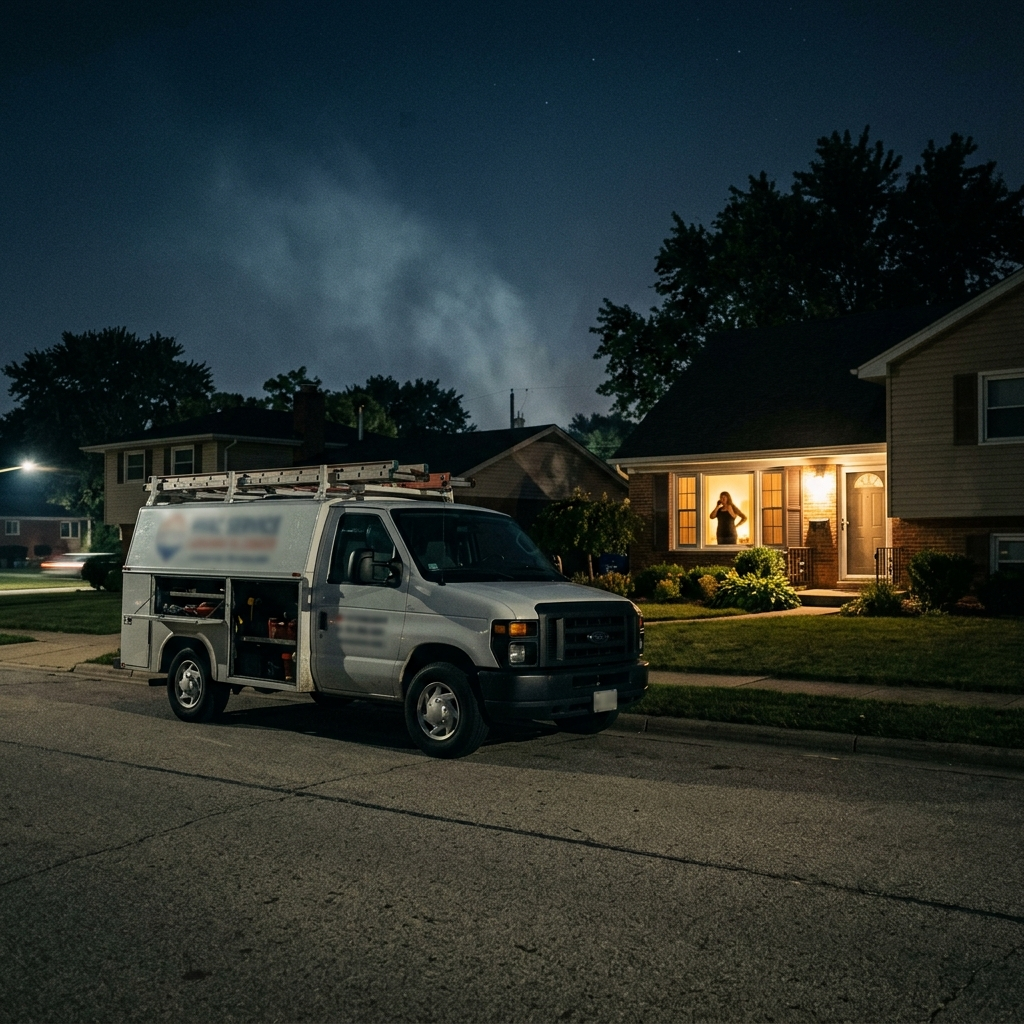
The After-Hours HVAC Revenue Gap: What Your Voicemail Is Actually Costing You Each Year
HVAC companies lose their highest-value calls after 5 PM. Here is what the annual cost is in precise terms, and what fixed looks like without adding headcount.
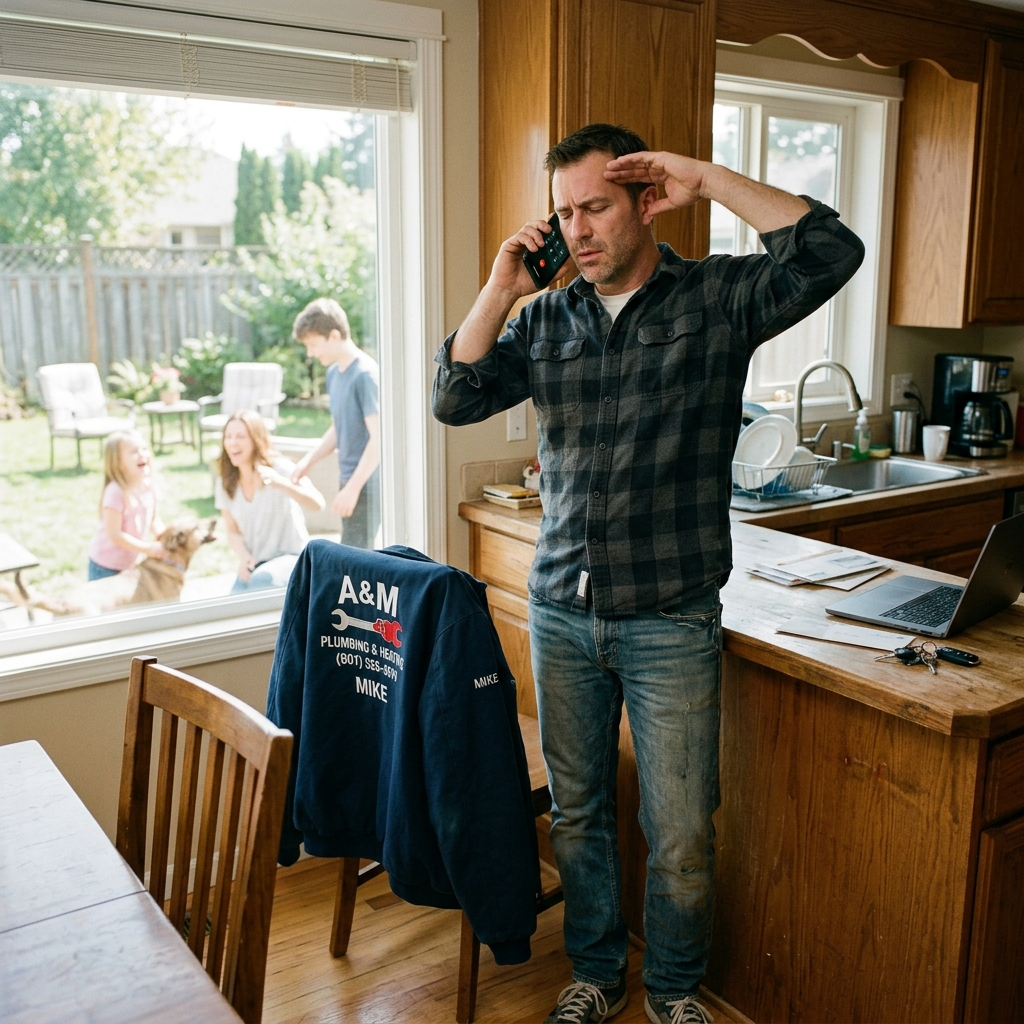
Why Plumbers Lose Weekend Calls and How to Stop It Without Hiring More Staff
The weekend emergency call is the highest-value call a plumbing company receives. Here is the structural reason so many go unanswered, and the fix that does not require headcount.